
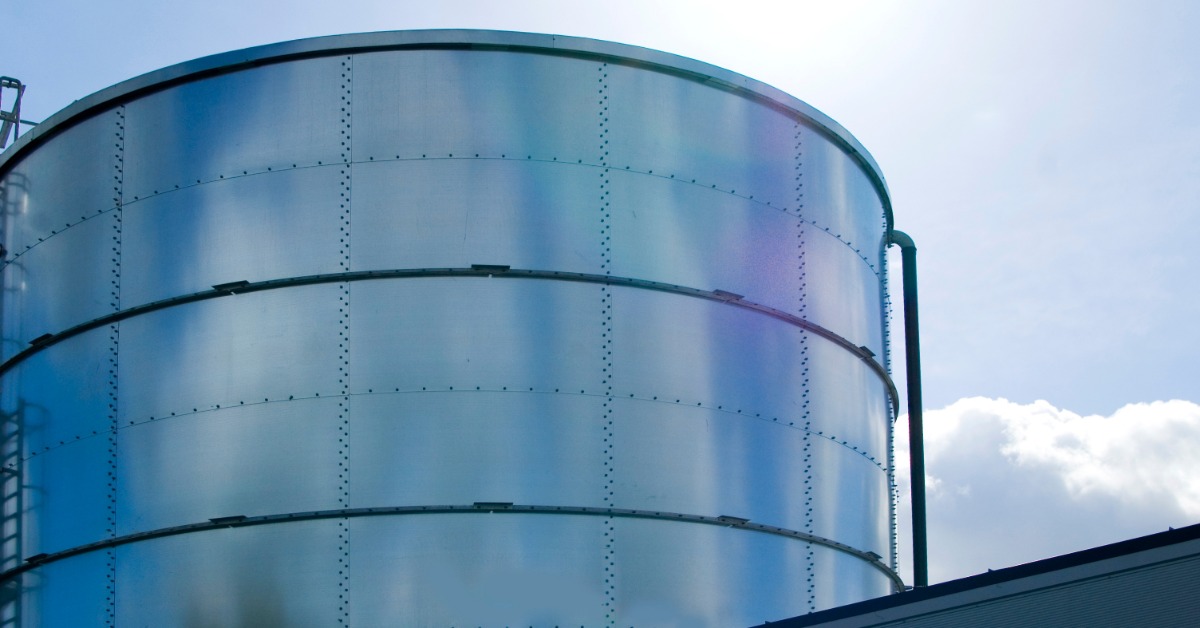
When your facility depends on a steady water supply, storage does more than hold extra volume. It gives you more control when daily demand shifts during a supply interruption, and that stored water can buy your operation valuable time to respond.
This becomes especially important in commercial and industrial settings where water supports essential processes. Municipal systems face similar pressures because they must continue serving users even as demand changes throughout the day.
To understand what makes large-scale water storage systems crucial, consider what happens when supply and demand no longer line up. A properly designed storage system creates a reserve available when incoming supply can't keep pace.
Balance Water Supply With Changing Demand
Most facilities do not use water at a perfectly steady rate. Your operation may move through a period of limited consumption before production increases demand. A large building can experience a similar shift as occupancy changes. Municipal systems also see usage rise and fall throughout the day.
Without adequate storage, the incoming water supply has to respond to those changes as they happen. Large-scale storage creates a buffer between the source and the point of use.
During periods of lower demand, the system can replenish the tank. When consumption increases later, stored water can help cover the difference. This gives you greater flexibility in how you manage supply.
Build More Resilience Into Daily Operations
Storage becomes even more valuable when normal water delivery is disrupted. Equipment eventually needs service. Pumps can also experience unexpected downtime. In some cases, work elsewhere in a distribution network reduces the amount of water reaching your site.
Without a reserve, an interruption upstream can quickly become a problem inside your facility.
Before deciding how much reserve capacity to maintain, review your operation closely. The right volume depends on how long your most important processes need to continue when replenishment stops.
Several questions can help guide that discussion:
- How long can the facility operate without normal replenishment?
- How much water do critical processes require during an interruption?
- Does the site need to preserve a separate emergency reserve?
- How quickly can the normal supply recover?
- Can another storage vessel support operations during an outage?
- Is known future growth likely to increase reserve requirements?
Once you answer those questions, stored water becomes part of your continuity plan.

Protect Water Needed for Emergencies
Not every gallon in a storage tank necessarily serves the same purpose. Some facilities need to reserve part of their water supply for emergencies. Fire protection is one common example. If that reserve supports a dedicated safety function, ordinary consumption cannot exhaust it.
As a result, tank sizing must account for more than average daily use. Start by determining how much water your emergency plan requires. From there, you can evaluate how routine demand affects the remaining usable capacity.
Define the Reserve Before Choosing Capacity
It is easy to start with a tank size and work backward. A better approach begins with the requirement. Once you know what the reserve must support, you can determine the total storage the facility needs.
This helps prevent a situation where a tank appears large enough based on total volume but provides too little emergency capacity after normal consumption.
Keep Water Quality in the Storage Plan
More stored water does not always mean a better system. When water sits in a tank too long, its quality becomes harder to manage. Potable systems require special attention because the stored water must still meet drinking-water requirements when it returns to distribution. This makes turnover an important part of storage planning.
Match Capacity to the Way You Use Water
You want enough stored water to meet operational needs without creating excessive holding time. To find that balance, look at how frequently your tank cycles through its usable volume. An oversized tank may show more reserve on paper, yet much of that water can sit longer than the operation requires.
That is why capacity should reflect realistic consumption. For potable systems, water-quality considerations should also influence how you operate the tank after installation. Storage should support the broader treatment and distribution strategy rather than work against it.
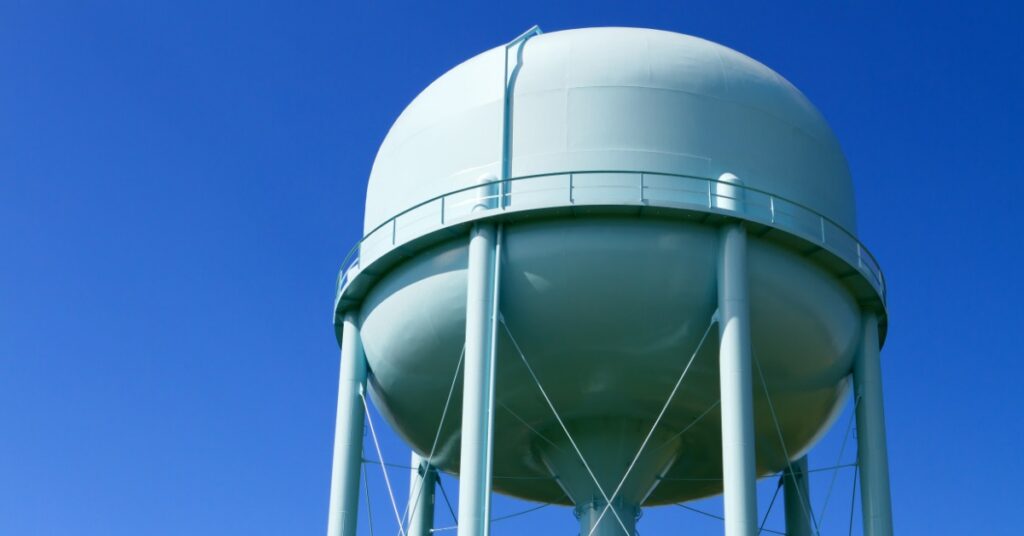
Protect the Tank Interior for Long-Term Service
The condition inside the tank directly affects storage reliability. Tank structures age differently depending on how they're built. Steel surfaces can experience corrosion. Concrete tanks, on the other hand, present their own set of interior conditions as they remain in service.
In many cases, the main tank still has useful structural life even when the interior needs renewed protection. A compatible tank liner creates a containment surface between the stored water and the underlying structure. This allows facility teams to address the interior without treating the entire tank as disposable.
For potable applications, material selection requires additional care. The liner needs to meet the standards that apply to the project and the water being stored.
Plan Maintenance Without Losing Reliability
Every storage tank eventually needs attention. The challenge becomes greater when the tank plays a central role in your water system. Taking it out of service can affect operations long before maintenance crews begin work.
If another tank can carry the demand temporarily, you have more flexibility. Before draining the tank, know how the system will continue supplying water. You should also determine what work needs to happen while crews have access to the empty vessel.
That preparation changes maintenance from a reactive event into a planned part of operations.
Prepare for Tomorrow's Water Demand
A large-scale water tank often stays in service while the surrounding facility changes. Production can expand over time. In municipal systems, growth can gradually place more pressure on existing infrastructure. Your storage strategy should account for those known changes without assuming unlimited future growth.
If a new production line will increase water use, include that change in today's storage discussion. The same principle applies when a facility expects occupancy to rise. Look for opportunities to preserve flexibility. A storage configuration that can adapt later gives you more options if demand develops as expected.
Make Large-Scale Storage Work for Your Operation
When you consider what makes large-scale water storage systems crucial, the answer goes well beyond total capacity. Their real value comes from providing a dependable water source when normal supply cannot immediately meet demand.
Maintaining that reliability also requires attention after installation. Water turnover needs to match the way your facility uses the system. You also need a maintenance plan that lets the tank go offline without unnecessary disruption. When the existing structure remains serviceable, but the containment surface needs renewal, a custom liner can become part of your long-term storage strategy.
Flexi-Liner offers water tank liners for sale designed for large-scale storage applications. If you are evaluating an existing tank, talk with our team about its configuration and current condition. We can help you determine whether a custom liner fits the way your storage system operates today.